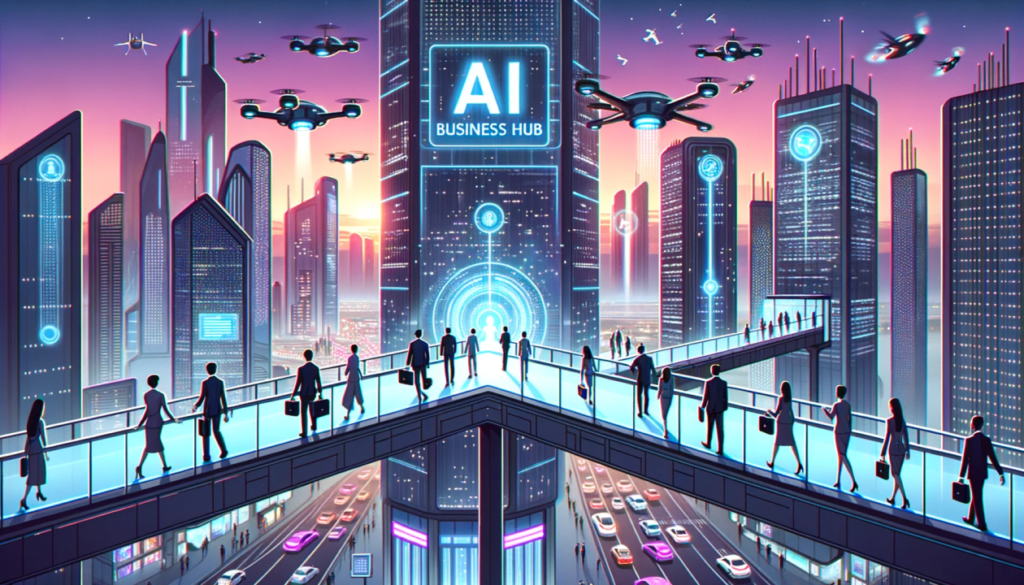
Future of AI in Business: How Artificial Intelligence Will Transform Companies by 2030
Introduction
Artificial intelligence (AI) has rapidly evolved from a futuristic concept into a core business technology. Organizations of every size are using AI to automate repetitive tasks, improve customer experiences, analyze massive datasets, and make smarter decisions. What was once considered a competitive advantage is quickly becoming a necessity.
As AI models become more capable and accessible, the future of AI in business looks even more transformative. From autonomous AI agents and predictive analytics to hyper-personalized marketing and intelligent automation, AI is reshaping how companies operate across every industry.
In this guide, we’ll explore the future of AI in business, the biggest trends to watch, practical use cases, challenges organizations should prepare for, and how businesses can stay competitive through 2030.
Why AI Is Becoming Essential for Businesses
Companies face increasing pressure to reduce costs, improve efficiency, and deliver better customer experiences. AI helps achieve all three by automating routine work and uncovering insights that humans might miss.
Key drivers behind AI adoption include:
- Rising labor costs
- Increasing data volumes
- Customer demand for personalization
- Faster decision-making requirements
- Improved cloud infrastructure
- More affordable AI tools
Businesses that adopt AI strategically are often able to improve productivity while focusing human talent on higher-value work.
The Current State of AI in Business
AI is already being used in nearly every major industry.
Marketing
- Content generation
- SEO optimization
- Customer segmentation
- Predictive advertising
- Email personalization
Customer Support
- AI chatbots
- Voice assistants
- Automated ticket routing
- Knowledge base search
Finance
- Fraud detection
- Expense automation
- Financial forecasting
- Risk assessment
Human Resources
- Resume screening
- Employee onboarding
- Performance analysis
- Workforce planning
Manufacturing
- Predictive maintenance
- Quality inspection
- Robotics
- Supply chain optimization
Top AI Trends Shaping Business by 2030
1. AI Agents Will Become Digital Employees
Instead of simply answering questions, AI agents will perform complete workflows.
Examples include:
- Booking meetings
- Managing emails
- Creating reports
- Conducting market research
- Handling customer requests
- Updating CRM systems
Businesses will increasingly use AI agents as virtual assistants for sales, marketing, finance, and operations.
2. Hyper-Automation Will Replace Manual Processes
Automation is evolving beyond simple workflows.
Future AI systems will:
- Understand documents
- Interpret customer intent
- Make recommendations
- Execute tasks automatically
Entire business processes—from invoice processing to customer onboarding—will require minimal human intervention.
3. Personalized Customer Experiences
AI will deliver individualized experiences based on customer behavior, preferences, and purchase history.
Businesses will use AI to provide:
- Personalized product recommendations
- Dynamic pricing
- Customized email campaigns
- AI-powered shopping assistants
- Intelligent customer support
This level of personalization can improve engagement, loyalty, and conversion rates.
4. AI-Powered Decision Making
Executives will rely on AI to analyze large volumes of business data and identify trends faster than traditional reporting methods.
AI can help answer questions like:
- Which products are most profitable?
- Which marketing campaigns generate the highest ROI?
- Which customers are likely to churn?
- Where can operational costs be reduced?
By combining predictive analytics with real-time data, businesses can make more informed decisions.
5. AI-Driven Cybersecurity
As cyber threats become more sophisticated, AI will play a critical role in protecting organizations.
Future AI security systems will:
- Detect unusual behavior
- Identify malware
- Prevent phishing attacks
- Monitor networks in real time
- Respond automatically to security incidents
This proactive approach can reduce response times and strengthen overall security.
6. Smarter Supply Chains
AI will continue to optimize supply chain operations by forecasting demand, managing inventory, and identifying potential disruptions before they occur.
Benefits include:
- Reduced waste
- Faster deliveries
- Lower operational costs
- Improved inventory management
7. AI in Healthcare, Retail, and Manufacturing
Industry-specific AI solutions will become increasingly advanced.
Examples include:
Healthcare
- Disease prediction
- Medical imaging analysis
- Virtual health assistants
Retail
- Inventory optimization
- Demand forecasting
- Customer personalization
Manufacturing
- Smart factories
- Automated quality control
- Predictive maintenance
Benefits of AI for Businesses
Businesses adopting AI can expect several advantages.
Increased Productivity
AI automates repetitive work, allowing employees to focus on strategic and creative tasks.
Better Decision Making
Real-time insights support faster and more accurate business decisions.
Cost Savings
Automation reduces operational expenses and minimizes manual errors.
Enhanced Customer Experience
AI enables 24/7 support, faster responses, and personalized interactions.
Competitive Advantage
Organizations that embrace AI early are better positioned to innovate and adapt to changing market conditions.
Challenges Businesses Must Address
Despite its benefits, AI adoption comes with challenges.
Data Privacy
Companies must protect customer information and comply with evolving regulations.
Ethical AI
Organizations should ensure AI systems are transparent, fair, and free from bias.
Workforce Transformation
AI will change job roles, making employee reskilling and upskilling essential.
Implementation Costs
Successful AI adoption requires investment in technology, infrastructure, and training.
How Small Businesses Can Prepare for the Future
Small businesses don’t need massive budgets to benefit from AI.
Practical first steps include:
- Automating customer support
- Using AI writing assistants
- Implementing AI-powered CRM tools
- Automating email marketing
- Using AI analytics platforms
- Leveraging AI scheduling tools
Starting with one or two high-impact use cases can deliver quick wins and build confidence for broader adoption.
Predictions for the Future of AI in Business
Over the next decade, we can expect:
- AI agents managing complex business workflows
- Greater collaboration between humans and AI
- Increased use of predictive analytics
- AI-powered software becoming standard in most industries
- More autonomous decision-making systems
- Widespread adoption of generative AI for content, design, and software development
Businesses that invest in AI skills and infrastructure today will be better equipped for these changes.
Conclusion
The future of AI in business is not a distant vision—it’s already unfolding. Organizations that integrate AI thoughtfully can streamline operations, improve customer experiences, and make smarter, data-driven decisions. While challenges such as privacy, ethics, and workforce adaptation remain, the long-term benefits are substantial.
Rather than viewing AI as a replacement for human expertise, successful businesses will use it as a powerful partner to enhance creativity, efficiency, and innovation. Companies that begin experimenting with AI today will be in a stronger position to compete and thrive in the years leading up to 2030.
Frequently Asked Questions
What is the future of AI in business?
The future of AI in business involves greater automation, intelligent decision-making, personalized customer experiences, and AI-powered digital assistants that enhance productivity and innovation.
Will AI replace human jobs?
AI will automate many repetitive tasks, but it is more likely to transform jobs than eliminate them entirely. New roles focused on AI management, strategy, and oversight are expected to grow.
Which industries will benefit most from AI?
Healthcare, finance, retail, manufacturing, logistics, marketing, education, and customer service are among the industries expected to see significant benefits.
How can small businesses use AI?
Small businesses can adopt AI for customer support, marketing automation, content creation, data analysis, scheduling, and sales management without large upfront investments.